
- Many countries offer a temporary or PR visa in exchange for an investment
- Investment amounts can range from $50,000 to $500,000 or more




in demand jobs in Germany, high paying jobs in Germany, jobs in Germany
work in Germany visa, Germany work visa for Canadian citizen, how to get job in Germany, can I find job in Germany, what is best job in Germany, jobs in Germany for Canadian, is Germany good for it jobs, jobs in Germany for foreigners, jobs in Germany with visa sponsorship, what jobs are there in Germany, Germany work visa, Germany work permit, German work visa, work in Germany, Germany work visa requirements, Germany work visa eligibility
Explore the top in demand jobs in Germany for 2025 with average salaries. Find career opportunities in healthcare, tech, finance, and more.
Top in-Demand Occupations in Germany
Germany is looking for skilled workers, with around 400,000 skilled jobs unfilled each year in areas such as engineering, healthcare, IT, and construction. For individuals with the right skills, this is a great chance to grow their careers, make good money, and find quicker routes to residency and citizenship.
| Occupation | Annual salary (Euros) |
|---|---|
| Engineering | € 58,380 |
| Information Technology | € 43,396 |
| Transportation | € 35,652 |
| Finance | € 34,339 |
| Sales & Marketing | € 33,703 |
| Childcare & Education | € 33,325 |
| Construction & Maintenance | € 30,598 |
| Legal | € 28,877 |
| Art | € 26,625 |
| Accounting & Administration | € 26,498 |
| Shipping & Manufacturing | € 24,463 |
| Food services | € 24,279 |
| Retail & Customer service | € 23,916 |
| Healthcare & Social services | € 23,569 |
| Hotel Industry | € 21,513 |
Why Work in Germany?
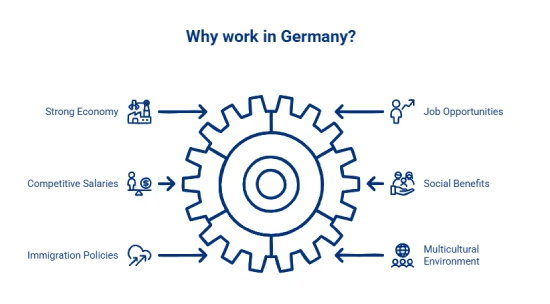
Germany has a strong economy and is a leader in fields like engineering, manufacturing, and tech. With low unemployment rates, good salaries, and a great quality of life, it's a popular choice for skilled workers from all over.
- There were over 1.9 million job openings in Germany in 2024, especially in IT, healthcare, and trades.
- The average salary for full-time workers is about €53,118 per year.
- Universal healthcare, pension plans, and strong worker protections are standard.
- The Skilled Immigration Act makes it simpler for qualified workers to get a work visa.
- With more than 11.8 million foreign residents, Germany offers a multicultural work environment.
Migrate with a Germany Work Visa
A Germany Work Visa is a long-term visa that lets non-EU citizens live and work in Germany. It is mainly for skilled workers who already have a job offer from a German company. This visa can help you get a residence permit, which could eventually lead to permanent residency. To apply, you need to meet certain qualifications, show you can speak the language, and prove you have enough money.
*Want to apply for a German work permit? Let Y-Axis guide you with the process.
Types of German work visa
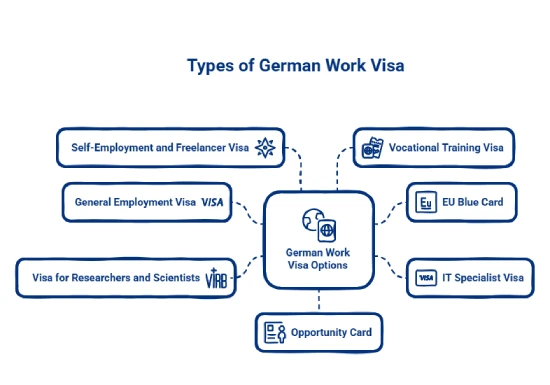
Germany has several work visa options to welcome skilled workers, entrepreneurs, researchers, and graduates from all over. These visas help fill job market gaps, encourage innovation, and give international talent a clear path to working and living in Germany. Each visa has its own requirements based on qualifications, experience, salary, or job type.
Here is a list of the work visas available in Germany:
- General Employment Visa: For skilled workers with recognized qualifications and a job offer from a German employer.
- EU Blue Card: For highly qualified non-EU individuals with a degree and a good job offer in Germany.
- IT Specialist Visa: For IT professionals who have ample relevant work experience, even if they don't have formal degrees.
- Visa for Researchers and Scientists: For academics or scientists with job offers from established German institutions.
- Self-Employment and Freelancer Visa: For those looking to start a business or freelancers providing services to clients in Germany.
- Vocational Training Visa: For individuals taking part in recognized vocational training programs in Germany.
- Opportunity Card (Chancenkarte): A new points-based visa that allows qualified professionals to live in Germany for up to a year while they look for a job.
List of High-Demand Jobs in Germany
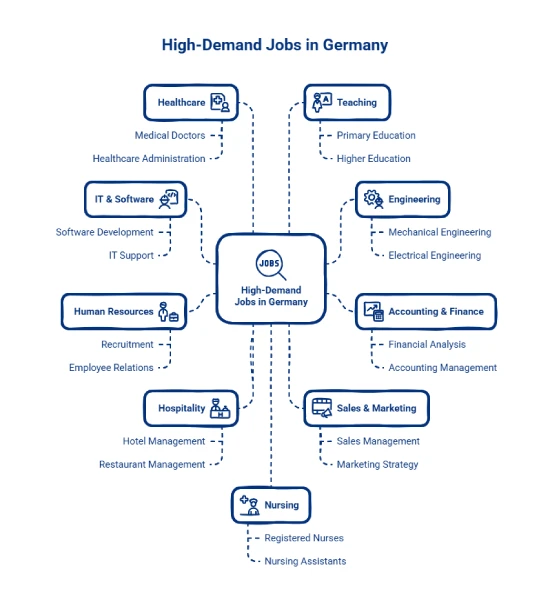
Germany offers lucrative career paths across engineering, IT, finance, and healthcare sectors. Whether you are an experienced professional or a recent graduate, these roles present competitive compensation and strong job prospects.
1. IT & Software Jobs in Germany
Germany's tech scene is booming, with high demand for software engineers, developers, and IT pros, particularly in Berlin, Munich, and Hamburg.
Average Salary: ~€71,300/year
Salary Range: €61,650 to €87,400/year
2. Engineering Jobs in Germany
Engineers in mechanical, civil, electrical, and similar areas are needed across Germany's industries.
Average Salary: ~€92,500/year
Salary Range: €64,500 (entry-level) to €115,000+ (senior)
3. Accounting & Finance Jobs in Germany
Accountants and financial analysts play important roles in Germany’s corporate world.
Average Salary: ~€54,000/year
Salary Range: €41,500 to €82,800/year
4. Human Resources Jobs in Germany
HR professionals are crucial for hiring and managing company policies with a huge demand in Germany.
Average Salary: Similar to accountants/engineers
Salary Range: About €50,000 – €80,000 depending on experience
5. Hospitality Jobs in Germany
Chefs, hospitality managers, and tourism professionals are finding more opportunities as travel picks up post-COVID.
Average Salary: ~€50,000 – €60,000/year
6. Sales & Marketing Jobs
Marketing and sales experts are in demand in both corporate and tech environments.
Average Salary: ~€60,000 – €90,000/year
7. Healthcare Jobs in Germany
RNs and medical technologists are always needed in the healthcare system.
Average Salary (RNs): ~€60,552/year
Salary Range: €42,936 – €74,968 (entry to senior)
8. Teaching Jobs in Germany
Teachers at all levels enjoy stable roles, especially in public schools.
Average Salary: ~€48,500/year
Salary Range: €40,200 – €66,600 depending on experience
9. Nursing Jobs in Germany
Nurses, especially in ICU and specialty areas, are increasingly sought after as the demand for healthcare workers rises.
Average Salary: ~€33,000 – €42,000/year (about €3,000–4,000/month)
*Want to work in Germany? Sign up with Y-Axis to guide you with the steps.
Eligibility Criteria for German work visa
The eligibility criteria to apply for a work visa in Germany is as follows:
- Valid Job Offer: You need a confirmed job offer from a German employer that fits your skills.
- Recognized Qualifications: Make sure you have a university degree or vocational qualification that Germany recognizes. You can check this using the ANABIN database.
- Adequate Professional Experience: You should have relevant work experience, usually at least 2 years, in your field.
- Proof of Financial Stability: You need to show that you can support yourself until you get your first paycheck. This could be bank statements or a salary confirmation.
- Health Insurance Coverage: You must have health insurance that meets German standards, whether it's public or private.
- Valid Passport: Your passport should be valid for the whole time you'll be staying.
- Language Proficiency (if required): If your job is regulated or for integration purposes, you might need to know basic German (around A2–B1 level).
- Clean Criminal Record: A certificate of good conduct from your home country may be needed.
- Visa Application Forms & Documentation: Make sure to fill out the application form, include passport photos, your job offer letter, and your academic and professional credentials.
- Residence Permit Eligibility: If you are applying for a long-stay (D) visa, you should plan to apply for a residence permit once you're in Germany.
Requirements to Work in Germany
You must fulfill the below requirements to be able work in Germany:
- A job offer or employment contract from a German company
- Recognized qualifications (either academic or vocational) related to your job
- An approved work visa or residence permit for work
- A valid passport with enough time left before expiration
- Proof of health insurance that’s accepted in Germany
- Evidence of financial support or salary to cover living costs
- Proof of where you'll stay in Germany, like a rental agreement or a housing confirmation
- German language skills, if your job or employer requires it
- A clean criminal record certificate, if they ask for one
- Registration with the local authorities when you arrive (that’s called Anmeldung)
- If you're coming from outside the EU, you’ll also need a National D visa to enter.
How to Apply for Jobs in Germany?
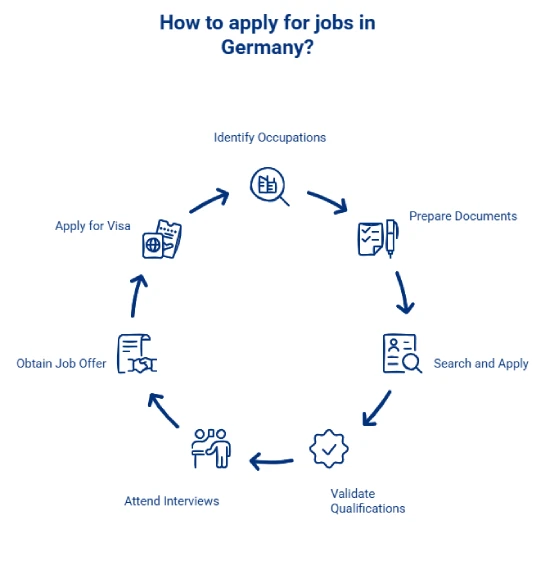
You can follow the steps below to apply for a job in Germany:
Step 1: Identify in-demand occupations in Germany
Step 2: Prepare your documents
Step 3: Search and apply for jobs online
Step 4: Validate your qualifications (if required)
Step 5: Attend interviews
Step 6: Obtain a job offer in Germany
Step 7: Apply for a German work visa
How can Y-Axis help you?
Y-Axis is the world's No.1 overseas Immigration consultant, providing unbiased and innovative immigration assistance for 25+ years.
Our team of experts will assist you with:
- Check free eligibility through the Y-Axis Germany Immigration Points Calculator
- Filling out the application form
- Assistance to migrate to Germany
- Assistance to apply for a Germany work visa.
- Arranging the requirements
- Looking for jobs in Germany? Avail Y-Axis Resume Marketing Services to find the right one!