
- Many countries offer a temporary or PR visa in exchange for an investment
- Investment amounts can range from $50,000 to $500,000 or more




Jobs in the UAE, Jobs in UAE, In-demand jobs in UAE, Work in UAE, Remote jobs in UAE, Remote work in UAE, Job opportunities in the UAE, UAE job market, Job market in the UAE, UAE Government policies
Explore top UAE job trends, in-demand skills, and visa options. Start your career journey in the UAE with expert guidance from Y-Axis!
Job Market in the UAE 2025-26
- In the first quarter of 2025, employment growth in the UAE hit 3.48%.
- There are over 418,500 job openings expected in the country each year.
- Green jobs saw a 12% increase compared to the previous year.
- Remote job listings jumped by 27% from last year.
- The UAE's GDP is forecasted to grow by 3.2% in 2025.
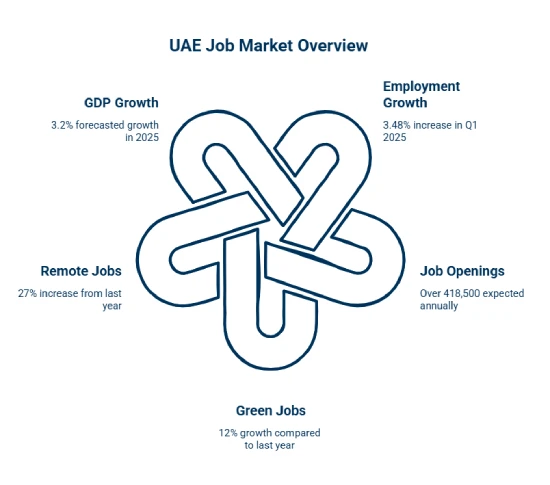
UAE Job Outlook
The UAE job market is on the rise in 2025, thanks to a mix of economic growth, investments in tech, and big infrastructure projects. There is a solid need for skilled workers, especially in areas like healthcare, tech, education, and renewable energy. The government’s Emiratization efforts and Vision 2031 are also impacting hiring trends. Plus, more companies are hiring remotely or using gig workers, which is changing the way they find talent. The UAE continues to attract expatriates, with benefits like a tax-free salary and global job options.
Here are some main points affecting the UAE job scene in 2025:
- National Emiratization plans and job quotas
- Investment in smart cities and tech innovations
- Growth in healthcare and education jobs
- Increases in green energy and sustainability projects
- High demand for bilingual workers and those with global experience
- Changing visa rules to bring in international talent
- Rise of hybrid and remote work models in various fields
*Want to work in the UAE? Let Y-Axis guide you with the process.
In-Demand Jobs in the UAE
The UAE’s economy is rapidly growing, leading to a major demand for skilled workers in areas like healthcare, IT, construction, and finance. With plans like Vision 2031 and investments in smart infrastructure, there are more job opportunities, especially in roles that help with digital services and public services.
| Occupation | Average annual salary |
|---|---|
| IT and Software | AED 192,000 |
| Engineering | AED 360,000 |
| Accounting and Finance | AED 330,000 |
| Human Resource Management | AED 176,000 |
| Hospitality | AED 286,200 |
| Sales and Marketing | AED 131,520 |
| Healthcare | AED 257,100 |
| STEM | AED 222,000 |
| Teaching | AED 192,000 |
| Nursing | AED 387,998 |
Read more…
Top in-demand occupations in the UAE
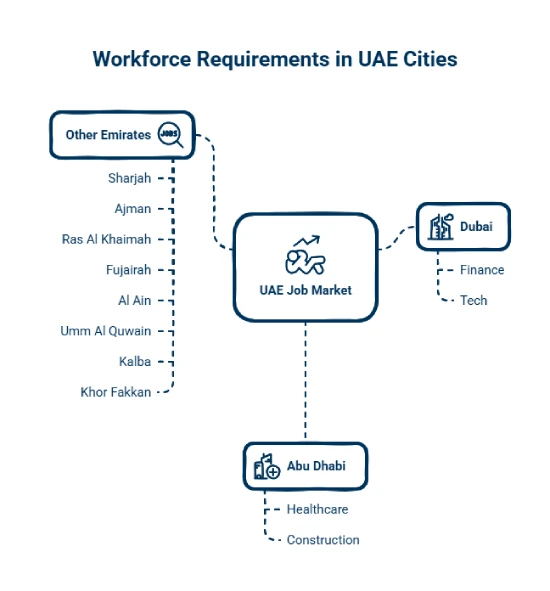
Workforce requirements in different cities in the UAE
The job needs in the UAE change from one emirate to another. Places like Dubai and Abu Dhabi are at the forefront, creating jobs in areas like finance, healthcare, construction, and tech. The fast growth, foreign investments, and government projects have all helped keep the job market strong, especially in new industries and building efforts.
The table below has the list of top 10 cities in the UAE along with the average salary offered and the employment growth rate:
| City | Average Annual Salary (AED) | Employment Growth Rate |
|---|---|---|
| Dubai | 2,40,000 | 3.20% |
| Abu Dhabi | 2,28,000 | 2.90% |
| Sharjah | 1,80,000 | 2.40% |
| Ajman | 1,60,000 | 2.10% |
| Ras Al Khaimah | 1,70,000 | 2.20% |
| Fujairah | 1,50,000 | 1.80% |
| Al Ain | 1,65,000 | 2.00% |
| Umm Al Quwain | 1,45,000 | 1.70% |
| Kalba | 1,40,000 | 1.60% |
| Khor Fakkan | 1,38,000 | 1.50% |
In-demand skills in the UAE
The UAE is working on becoming more focused on knowledge and innovation, and because of that, employers are looking for people who have both technical skills and soft skills. Right now, the skills that are most needed are related to digital change, business growth, and the expanding healthcare and finance industries.
Given below is a breakdown of the skills that are in high demand now:
| Technology Skills | Marketing Skills | Finance & Accounting Skills | Healthcare Skills | Leadership & Communication Skills |
|---|---|---|---|---|
| Artificial Intelligence & Machine Learning | Digital Marketing & SEO | Financial Analysis & Risk Management | Clinical Research & Patient Care | Strategic Planning & Decision-Making |
| Cybersecurity & Ethical Hacking | Content Creation & Copywriting | Taxation & Compliance | Health Informatics & Telemedicine | Cross-Cultural Communication |
| Data Science & Analytics | Social Media Management | Budgeting & Forecasting | Medical Technology & Equipment Handling | Team Leadership & Conflict Resolution |
| Cloud Computing & DevOps | CRM Tools (e.g., Salesforce) | Auditing & Internal Controls | Emergency & Critical Care | Negotiation & Stakeholder Management |
| Blockchain Development | Brand Management & PR | Financial Reporting Standards (IFRS) | Pharmaceutical Knowledge | Emotional Intelligence & Adaptability |
Remote work in the UAE
Remote work has really taken off in the UAE, especially after the changes brought on by the pandemic. To meet the need for more flexible work setups, the UAE government introduced the Virtual Work Residence Visa. This allows foreign workers to live in the UAE and work remotely for companies based abroad. It shows how the country is looking to support digital growth and bring in talent from around the world. A 2024 survey by Bayt.com found that more than 70% of professionals in the UAE prefer either hybrid or fully remote jobs, with fields like tech, marketing, and consulting being the most popular for remote work.
Businesses in the UAE are getting on board with hybrid work models thanks to better digital tools and cloud services. Cities like Dubai and Abu Dhabi are becoming popular spots for remote work because of their quality of life, safety, and good connections to the world. Co-working spaces are booming too, with a 12% increase in demand for shared offices. All of this shows that the UAE is serious about preparing for the future and staying competitive as a global job market.
*Want to migrate to the UAE? Sign up with Y-Axis for complete immigration assistance!
UAE Government Policies & Initiatives
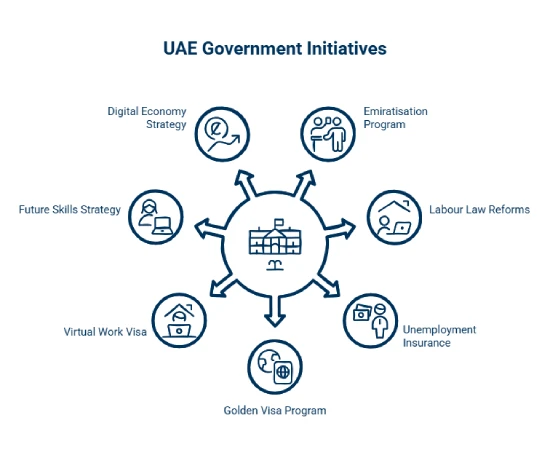
The UAE government has rolled out several key policies and programs designed to improve workforce development, attract talent from abroad, and diversify the economy. These actions support the UAE Vision 2030 and show the country's focus on preparing its labor market for the future.
Here’s a look at some important initiatives:
- Emiratisation Program (Nafis): This initiative aims to boost the number of UAE citizens in private sector jobs by providing salary support, training, and matching them with job opportunities.
- UAE Labour Law Reforms (Federal Decree Law No. 33 of 2021): These reforms introduce flexible work options like part-time and remote work, improving workers' rights and giving employers more flexibility.
- Unemployment Insurance Scheme: This program offers financial help to insured UAE citizens and residents who lose their jobs unexpectedly, helping to stabilize the job market.
- Golden Visa Program: This visa provides long-term residency for investors, entrepreneurs, skilled workers, and outstanding students, aiming to keep talented individuals in the UAE.
- Virtual Work Residence Visa: This allows foreigners to live in the UAE while working remotely for companies located outside the country, making the UAE an attractive spot for digital nomads and freelancers.
- Future Skills Development Strategy: This strategy focuses on improving digital skills, coding, and preparing for future jobs through partnerships with tech leaders and educational institutions.
- Digital Economy Strategy: The goal here is to increase the digital economy's contribution to the UAE’s GDP to over 20% by 2031, promoting innovation and job opportunities in the tech sector.
Employee Benefits in the UAE
The UAE has a solid work environment that's friendly to employees, with labor laws in place to make sure everyone, whether local or international, is treated fairly and kept safe. Workers here can access a good variety of benefits to help with both their careers and personal lives.
Here are some key benefits for employees in the UAE:
- No Income Tax: Employees don’t pay income tax on their salaries, which is a nice perk.
- Gratuity Pay: When you finish your job, you get an end-of-service benefit based on how long you worked there, which takes the place of pensions for expats.
- Annual Leave: After a year of service, you get at least 30 days of paid vacation.
- Public Holidays: You can expect around 10 to 13 public holidays each year.
- Health Insurance: Most employers in Dubai and Abu Dhabi provide mandatory health coverage.
- Maternity & Paternity Leave: Moms get 60 days of leave (45 paid and 15 unpaid), while dads get 5 days of paid leave.
- Workplace Safety: There are laws ensuring that workplaces are safe and free from discrimination and harassment.
- Flexible Work Options: You can find legal options for part-time, temporary, and remote work arrangements.
- Air Ticket Allowance: Depending on the employer, many companies provide annual or biennial flights back home.
- Housing Benefits: Some employers offer housing or a housing allowance as part of the pay package.
Job Opportunities in the UAE: Challenges for Job Seekers
The UAE has a lively job market and attracts talent from all over the globe. While there is no shortage of job openings in different fields, those looking for work from outside the country might encounter some specific challenges.
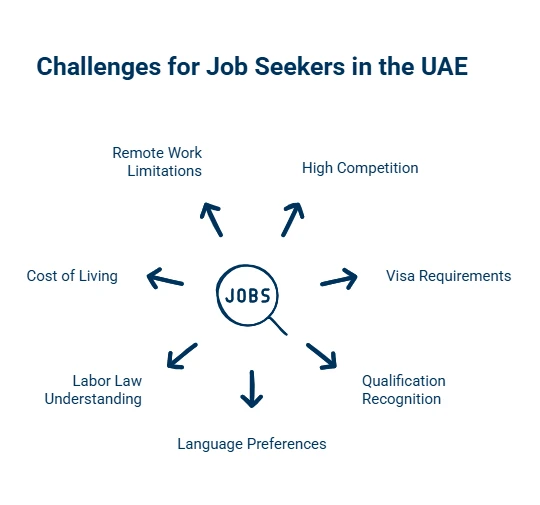
Some of the most common challenges for job seekers in the UAE are as follows:
- High Competition: Many skilled professionals are drawn to the UAE, leading to a crowded job market. This means that popular positions, especially in sought-after industries, can receive a lot of applications from qualified candidates.
- Visa and Sponsorship Requirements: Most foreign workers need a job offer from a company that will sponsor their work and residency permits. This can limit job options and make the hiring process take longer.
- Recognition of Foreign Qualifications: Sometimes, degrees and experience from other countries aren't recognized or valued by local employers, especially in fields like healthcare or education where specific regulations apply.
- Language Preferences: Although English is commonly used in business, some jobs, particularly in government or customer service roles, may require knowledge of Arabic.
- Understanding Local Labor Laws: Being unfamiliar with UAE employment laws, types of contracts, and workers' rights can put job seekers at a disadvantage.
- Cost of Living and Relocation: Moving to cities like Dubai or Abu Dhabi can be quite expensive, with costs related to housing, education, and general living. This isn't always covered by employers.
- Limitations on Remote Work: Even though remote work is becoming more common globally, some sectors in the UAE still prefer traditional office setups, which can limit flexibility for those looking for remote positions.
How to Navigate the UAE Job Market Successfully?
Finding a job in the UAE can be tricky, especially if you are coming from abroad. The job scene is competitive and always changing, so knowing what employers want and keeping up with market trends can really help.
Here are some tips to boost your chances:
- Look into the in-demand sectors: Check out which sectors are hiring, like healthcare, IT, construction, education, and finance. Official sources, like the Ministry of Human Resources and job sites, can give you the latest info on what's hot right now.
- Craft a UAE-Friendly CV: Make your resume fit the UAE style, keep it short and to the point, use a clear format, and make sure to show off your relevant skills and achievements. Don’t forget a professional photo and your visa status if it applies.
- Use Trusted Job Portals and Recruiters: Go for well-known job sites like Bayt, GulfTalent, and LinkedIn. You can also sign up with reputable recruitment agencies in the UAE to find more job opportunities.
- Network: Make connections in your field through LinkedIn, professional events, and webinars. A lot of jobs in the UAE get filled through referrals and recommendations.
- Know the Work Visa Process: Make sure you understand the eligibility requirements and the visa sponsorship process. Most jobs need a valid job offer to get a work visa in the UAE.
*Finding it difficult to keep your resume up-to-date? Avail Y-Axis Resume Writing Services to get personalized assistance!
UAE Job Market Summary
The job market in the UAE is steady, thanks to efforts like the UAE Vision 2031 and the Emiratisation programs. Recently, there have been over 400,000 job openings, especially in fields like healthcare, IT, construction, education, and finance. The unemployment rate is low at 2.75%. New trends, such as remote work and flexible visas, are changing how people look for jobs. With good salaries, tax-free income, and plenty of opportunities in both public and private sectors, the UAE is still a great place for skilled workers from around the world.
*Are you looking for step-by-step assistance with overseas Immigration? Contact Y-Axis, the leading visa and immigration consultancy in Canada!