
- Many countries offer a temporary or PR visa in exchange for an investment
- Investment amounts can range from $50,000 to $500,000 or more




In demand jobs in Germany, Jobs in Germany, German job market, Germany job market, Remote jobs in Germany, Remote job in Germany, Work in Germany, Employee Benefits in Germany, German Government Policies , Germany Government Policies, German Job outlook
Explore top German job trends, in-demand skills, and visa options. Start your career journey in Germany with expert guidance from Y-Axis!
Job Market in Germany 2025-26
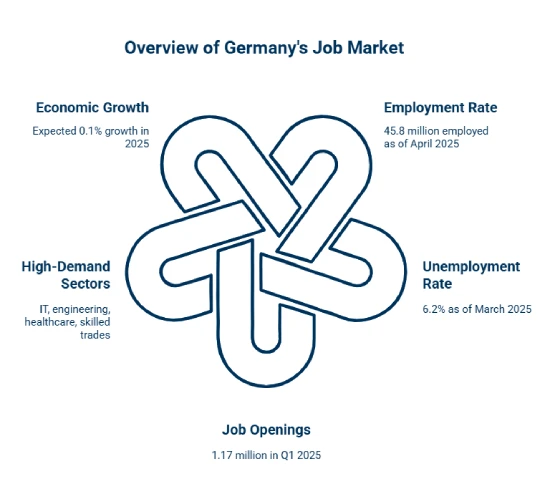
- As of April 2025, there are about 45.8 million people with jobs in Germany.
- The unemployment rate is at 6.2% as of March 2025.
- In the first quarter of 2025, there were around 1.17 million job openings.
- Huge demand for workers in IT, engineering, healthcare, and skilled trades.
- The economy is expected to grow only 0.1% in 2025, according to the Bundesbank.
Germany Job Outlook
Germany’s job market is holding steady in 2025, with more than 45 million people working. There is a growing demand for jobs in areas like IT, healthcare, and engineering. Even though the GDP is only expected to grow by 0.1%, there are still jobs being created, especially for skilled workers. With an older population and the ongoing shift towards digital tech, the need for qualified workers is on the rise. Immigration is important, too, as it helps fill gaps in the workforce. Cities like Berlin, Munich, and Hamburg are top spots for jobs, offering good pay and career opportunities.
Here are some key factors affecting the German job market in 2025:
- Skills shortage in tech and healthcare
- Aging workforce creating a need for younger talent
- Digital changes leading to new jobs in AI, data, and automation
- Immigration policies that support skilled foreign workers
- Economic slowdown affecting hiring in some sectors
*Want to work in Germany? Let Y-Axis guide you with the process.
In-Demand Jobs in Germany
Germany's job market is really looking for skilled workers, especially in tech, healthcare, and engineering. The Federal Employment Agency (BA) reported more than 1.7 million job openings at the start of 2024, with many of those in STEM fields. Changes in technology, energy needs, and population trends are boosting the demand for qualified workers, which makes Germany a great place for international talent.
|
Occupations |
Average Salary |
|
Engineering |
€ 54,827 |
|
Information Technology |
€ 47,834 |
|
Marketing & Sales |
€ 41,613 |
|
Human Resources |
€ 33,335 |
|
Healthcare |
€ 36,000 |
|
Teacher |
€ 46,800 |
|
Accountant |
€ 50,038 |
|
Hospitality |
€ 28,813 |
|
Nursing |
€ 68,250 |
|
Finance |
€ 46,015 |
|
Food services |
€ 40,000 |
|
Manufacturing |
€ 55,200 |
|
Customer service |
€ 33,541 |
Read more…
Top in demand occupations in Germany
Workforce requirements in different cities in Germany
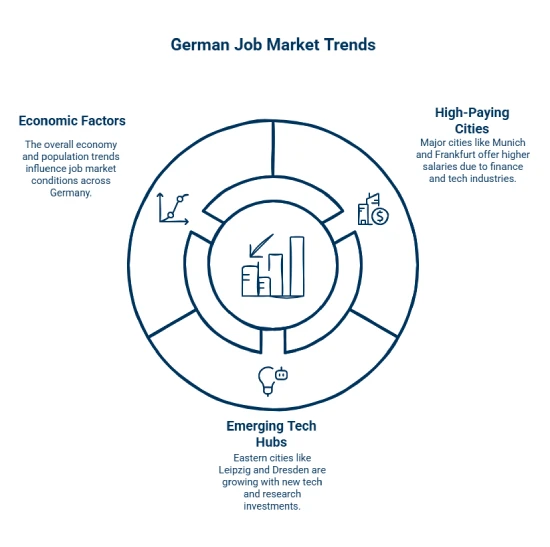
In 2025-26, Germany's job market will look quite different from place to place, depending on the industries that are setting up shop, how the economy is doing, and population trends. Big cities like Munich, Frankfurt, and Stuttgart tend to pay more because they are centres for finance, tech, and car industries. On the other side, places in eastern Germany, like Leipzig and Dresden, are seeing a boost thanks to new investments in tech and research.
The table below has the list of top 10 cities in Germany along with the average salary offered and the employment growth rate:
|
City |
Average Annual Salary (€) |
Employment Growth Rate (%) |
|
Munich |
58,000 |
1.5 |
|
Frankfurt |
57,250 |
1.4 |
|
Stuttgart |
56,250 |
1.3 |
|
Düsseldorf |
52,500 |
1.2 |
|
Hamburg |
48,100 |
1.1 |
|
Berlin |
42,100 |
1 |
|
Leipzig |
39,695 |
1.3 |
|
Dresden |
43,302 |
1.2 |
|
Nuremberg |
48,079 |
1.1 |
|
Mannheim |
53,512 |
1 |
In-demand skills in Germany
Germany's economy is always changing, with a growing need for skilled workers in various fields. The country's push for digital change, eco-friendliness, and modern healthcare is creating demand for specific skills. Whether it is software engineering, finance, marketing, or healthcare, German companies are on the lookout for individuals with strong tech skills and good people skills.
Given below is a breakdown of the skills that are in high demand now:
|
Technology Skills |
Marketing Skills |
Finance & Accounting Skills |
Healthcare Skills |
Leadership & Communication Skills |
|
Software development (Java, Python) |
Digital marketing & SEO |
Financial planning & analysis |
Patient care & nursing |
Team leadership |
|
Cloud computing (AWS, Azure) |
Social media strategy |
IFRS and GAAP compliance |
Geriatric & palliative care |
Cross-functional collaboration |
|
Data science & analytics |
CRM (Salesforce, HubSpot) |
Risk & compliance management |
Medical technology operation |
Conflict resolution |
|
Cybersecurity & IT security |
Performance marketing |
Tax advisory & audit skills |
Rehabilitation therapy |
Strategic decision-making |
|
AI & machine learning |
Brand & content strategy |
Corporate budgeting |
Emergency & trauma care |
Multilingual communication (German + English) |
Remote work in Germany
Remote work has become a big part of working life in Germany. Thanks to digital technology and what we learned during the pandemic, a lot of companies are now offering flexible work options. A report from the German Federal Statistical Office in 2024 shows that about 24% of workers in Germany regularly work from home, especially in fields like IT, finance, marketing, and administration. Cities like Berlin, Munich, and Frankfurt are leading the way, with both start-ups and big companies providing hybrid and fully remote positions.
This change has helped improve work-life balance, productivity, and access to talent from different locations. While there isn't a formal right to work from home yet, Germany’s laws do support remote work. There are talks about the Mobile Work Act to clarify workers’ rights and responsibilities. As demand grows for digital tools, cybersecurity, and virtual collaboration, remote work is likely to stick around in Germany’s job market.
*Want to migrate to Germany? Sign up with Y-Axis for complete immigration assistance!
German Government Policies & Initiatives
Germany is taking steps to build a strong and inclusive job market for the future. The focus is on embracing technology, bringing in skilled workers from abroad, and making the workforce more adaptable to meet economic needs.
Here are some key initiatives from the German government:
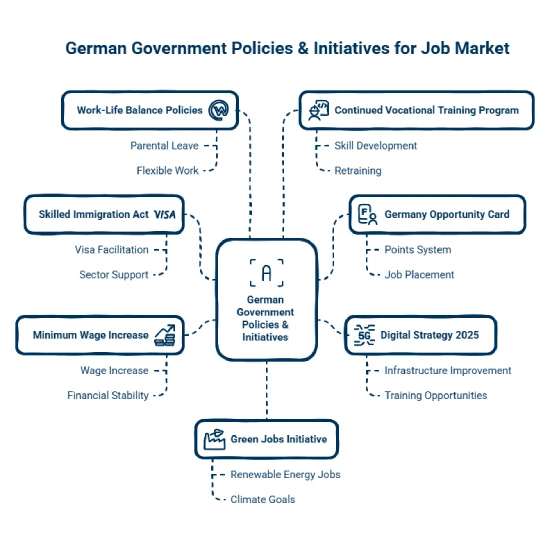
- Skilled Immigration Act: This makes it easier for skilled workers from outside the EU to get visas and fill jobs in sectors that urgently need help.
- Germany Opportunity Card: A points-based system has been rolled out to help qualified foreign professionals find jobs in Germany.
- Digital Strategy 2025: This plan aims to boost digital transformation through better infrastructure and training opportunities for workers.
- Minimum Wage Increase: As of January 2024, the national minimum wage will go up to €12.41/hour, which helps improve financial stability for those earning less.
- Work-Life Balance Policies: There are improved parental leave options, flexible work arrangements, and support for childcare to encourage more people, especially women, to participate in the job market.
- Continued Vocational Training Program: This program helps both employed and unemployed people develop new skills and retrain for different jobs.
- Green Jobs Initiative: This aims to create jobs in renewable energy and sustainable industries, aligning with Germany's climate goals.
Employee Benefits in Germany
Germany offers benefits focused on helping employees maintain a good work-life balance and ensuring their well-being. The laws in Germany protect workers' rights and provide both financial help and other support throughout their careers.
Here are some key employee benefits in Germany:
- Health Insurance: This is required for all employees, with costs usually shared between the employer and employee.
- Pension Scheme: Workers are part of a state pension plan, which secures income after retirement.
- Unemployment Insurance: Provides financial aid and support for job hunting if someone loses their job.
- Paid Vacation: Employees get at least 20 paid vacation days each year, with more often available through agreements.
- Parental Leave & Benefits: Parents can take up to 14 months of leave, with some pay during that time.
- Sick Leave Benefits: Employees can receive up to 6 weeks of paid sick leave from their employer, and then health insurance continues to provide coverage.
- Public Holidays: Depending on the state, Germany recognizes between 9 and 13 public holidays each year.
- Workplace Protections: Strong labor laws ensure safe working conditions, fair pay, and protection against unfair job loss.
- Training & Development Support: Many companies offer ongoing education, language classes, and vocational training.
- Flexible Work Options: More companies are providing remote and hybrid work setups to help employees balance their work and personal lives.
Note: All these benefits make Germany an attractive place for skilled workers looking for a stable and supportive work environment.
Job Opportunities in Germany: Challenges for Job Seekers
Germany has a strong job market with roles available in areas like engineering, IT, and healthcare. That said, finding a job here can be challenging for international professionals, mainly due to language issues, cultural differences, and the rules around working here.
Here are some common challenges that job seekers face in Germany:
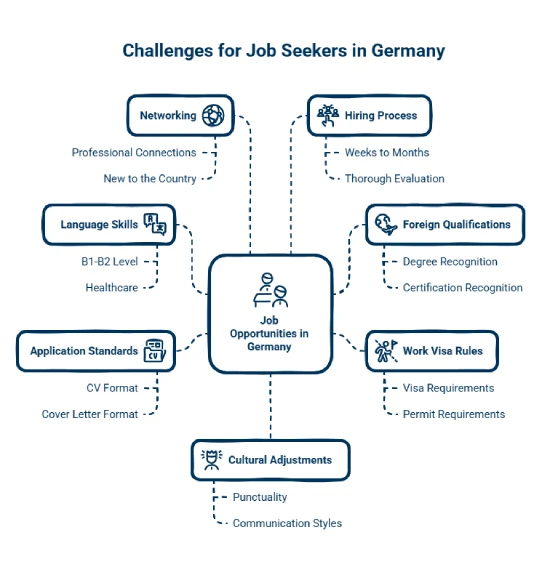
- Language Skills: Many jobs need you to speak German at least at a B1-B2 level, especially in healthcare and public services.
- Foreign Qualifications: If you have degrees or certifications from other countries, you might need to get them recognized by German officials.
- Work Visa Rules: Getting the right visa or work permit can be a long process with a lot of paperwork.
- Application Standards: German CVs and cover letters have specific formats, and not following these can hurt your chances.
- Networking: Making professional connections is important but can be hard for those new to the country.
- Hiring Process: German companies tend to have thorough hiring processes, which can take weeks or even months.
- Cultural Adjustments: Getting used to workplace culture, like being on time and understanding communication styles, may take a bit of time.
How to Navigate Germany Job Market Successfully?
Germany’s job market is well-organized and focused on skills, making it a great place for qualified professionals from all kinds of fields. If you are looking for work there, it’s important to match your job applications to what they expect, use local job websites, and work on any cultural or language challenges.
Here are some tips to help you find a job in Germany:
- Learn German: Try to get your language skills to at least a B1-B2 level. This will help you find more job options and communicate better.
- Get Your Qualifications Recognized: Use sites like anabin or Recognition in Germany to make sure your foreign degrees and experience are acknowledged.
- Use Official Job Portals: Check out job sites like Make it in Germany, Arbeitsagentur, and EURES for real job listings.
- Tailor Your Application: Make sure your CV and cover letter fit the German standards and showcase your relevant achievements.
- Build a Professional Network: Go to industry events or join platforms like XING, which is similar to LinkedIn in Germany. This will help you meet potential employers and recruiters.
*Finding it difficult to keep your resume up-to-date? Avail Y-Axis Resume Writing Services to get personalized assistance!
Germany Job Market Summary
Germany's job market is one of the strongest in Europe, thanks to a solid economy and a good labour system. As of early 2024, there are more than 1.8 million job openings, especially in healthcare, engineering, IT, and skilled trades. The unemployment rate is low at about 5.8%, which shows a stable economy and plenty of jobs available.
There is a huge demand for foreign professionals, and the German Skilled Immigration Act helps international workers settle here more easily. The government's focus on digital transformation, green energy, and improving infrastructure is creating new jobs, especially in tech and engineering. With a well-organized system and good employee benefits, Germany is a great place for skilled workers looking for job opportunities.
*Are you looking for step-by-step assistance with Germany Immigration? Contact Y-Axis, the leading visa and immigration consultancy in Canada!