
- Many countries offer a temporary or PR visa in exchange for an investment
- Investment amounts can range from $50,000 to $500,000 or more




In demand jobs in Australia, Australia job market, Australian job market, Jobs in Australia, Australia Job outlook, Australian Job outlook, Work in Australia, Remote work in Australia, In-demand skills in Australia, Australia Government Policies, Job Opportunities in Australia, Employee Benefits in Australia
Explore top Australian job trends, in-demand skills, and visa options. Start your career journey in the Australia with expert guidance from Y-Axis!
Job Market in Australia 2025-26
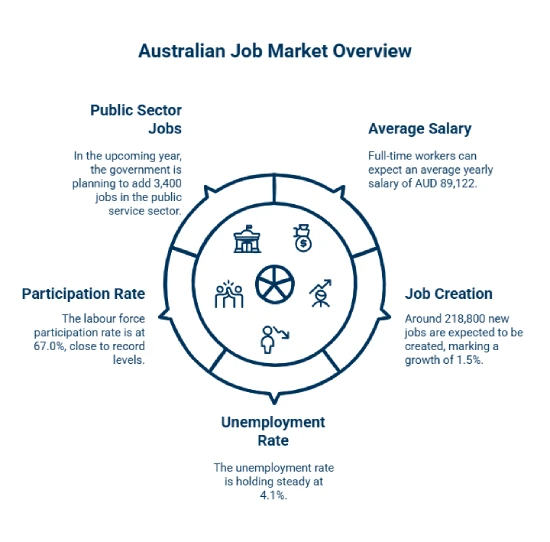
- Full-time workers can expect an average yearly salary of AUD 89,122.
- Around 218,800 new jobs are expected to be created, marking a growth of 1.5%.
- The unemployment rate is holding steady at 4.1%.
- The labour force participation rate is at 67.0%, close to record levels.
- In the upcoming year, the government is planning to add 3,400 jobs in the public service sector.
Australia Job Outlook
Australia's job market is looking decent, thanks to a recovering economy, more people moving here, and a need for workers in key areas like healthcare, tech, and construction. The unemployment rate is steady, and the government's putting money into infrastructure and bringing in skilled workers to fill gaps, so there are plenty of jobs available for skilled professionals.
Here are some key things shaping the Australian job market in 2025:
- Population Growth: More people moving to Australia means more demand for skilled workers.
- Aging Population: There's a growing need for jobs in healthcare and care for the elderly.
- Digital Transformation: There's a higher demand for IT workers, data analysts, and cybersecurity experts.
- Infrastructure Projects: Big investments in transport and energy are creating jobs in construction and engineering.
- Skilling Initiatives: Government programs are helping people get the skills they need for the changing job market.
*Want to work in Australia? Let Y-Axis guide you with the process.
In-Demand Jobs in Australia
Australia's job market is changing rapidly, with a major need for workers in areas like healthcare, tech, construction, and education. The government's list of in-demand jobs reflect positions that are vital for the country's growth, which is good news for both local and overseas workers. Jobs like registered nurses, software developers, electricians, teachers, and construction managers are really sought after, with steady job growth and decent pay. Additionally, these jobs often come with easier visa options for skilled migrants.
| Occupation | Annual Salary in AUD |
|---|---|
| IT | $81,000 – $149,023 |
| Marketing & Sales | $70,879 – $165,000 |
| Engineering | $87,392 – $180,000 |
| Hospitality | $58,500 – $114,356 |
| Healthcare | $73,219 – $160,000 |
| Accounting & Finance | $89,295 – $162,651 |
| Human Resources | $82,559 – $130,925 |
| Construction | $75,284 – $160,000 |
| Professional and Scientific Services | $90,569 – $108,544 |
Read more…
Top in-demand occupations in Australia
Workforce requirements in different cities in Australia
Australia's job market changes a lot from one city to another, mainly because of different industries, living costs, and how cities are growing. Places like Sydney and Melbourne have a bunch of job options in tech, finance, and education. Meanwhile, cities like Perth and Brisbane are more into mining, construction, and healthcare. There is a huge job growth in smaller cities, showing that Australia’s economy is still expanding and has a need for skilled workers.
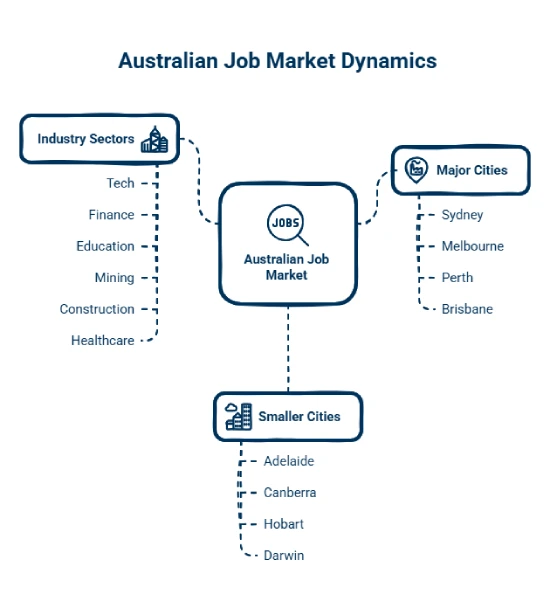
The table below has the list of top 10 cities in Australia along with the average salary offered and the employment growth rate:
| City | Average Annual Salary (AUD) | Employment Growth Rate |
|---|---|---|
| Sydney, NSW | $97,000 | 3.10% |
| Melbourne, VIC | $92,000 | 3.00% |
| Brisbane, QLD | $89,000 | 2.80% |
| Perth, WA | $91,500 | 2.90% |
| Adelaide, SA | $85,000 | 2.60% |
| Canberra, ACT | $98,000 | 3.20% |
| Hobart, TAS | $82,000 | 2.40% |
| Darwin, NT | $88,000 | 2.30% |
| Gold Coast, QLD | $84,000 | 2.70% |
| Newcastle, NSW | $83,500 | 2.50% |
In-demand skills in Australia
Australia’s job market is currently evolving, with a major focus on digital skills, finance knowledge, healthcare skills, and soft skills like communication and leadership. As companies adjust to things like automation, remote work, and economic changes, both tech skills and people skills are becoming more important in various fields.
Given below is a breakdown of the skills that are in high demand now:
| Technology Skills | Marketing Skills | Finance & Accounting Skills | Healthcare Skills | Leadership & Communication Skills |
|---|---|---|---|---|
| Cloud Computing (AWS, Azure) | SEO & SEM | Financial Reporting | Patient Care & Support | Team Leadership |
| Cybersecurity | Digital Analytics | Taxation & Compliance | Aged Care Services | Conflict Resolution |
| Software Development | CRM Tools (e.g., Salesforce) | Budgeting & Forecasting | Mental Health Support | Business Communication |
| Data Analysis & BI Tools | Social Media Management | Auditing | Medical Administration | Stakeholder Engagement |
| DevOps & Automation | Content Marketing | Risk Management | Emergency Care Skills | Strategic Thinking |
Note: The skills mentioned in the above table are what most Australian employers often look for. It is important to note that you upskill yourself depending on the economy, where you are, while staying updated to the latest immigration rules.
Remote work in Australia
Remote work has become a common part of the modern job scenario in Australia, especially in fields like IT, marketing, education, finance, and admin. According to the Australian Bureau of Statistics, over 37% of Australians have been working from home recently, showing a clear move toward more flexible workplaces. This change has come about because employers are adjusting and employees want a better work-life balance.
Big cities like Sydney, Melbourne, and Brisbane are leading the way in offering both hybrid and fully remote jobs, but even regional areas are seeing an increase in flexible job options. Lots of companies are now using remote work to attract top talent from all over the country. As technology keeps improving, remote work is likely to stay an important part of the job market in Australia.
*Want to migrate to Australia? Sign up with Y-Axis for complete immigration assistance!
Australian Government Policies & Initiatives
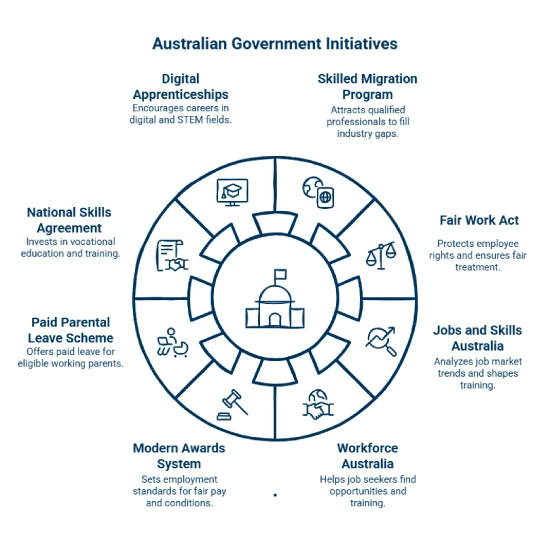
The Australian Government has launched several policies and programs to support workers and improve the job market while also tackling skills shortages. These measures aim to get people ready for work, ensure fair treatment on the job, and help both local and migrant employees grow in their careers.
Here are some of the main initiatives:
- Skilled Migration Program: This program gives visas to qualified professionals to fill gaps in key industries.
- Fair Work Act: This law protects employee rights regarding pay, hours, time off, and safety at work.
- Jobs and Skills Australia (JSA): This national group looks at job market trends and helps shape training to fit what industries need.
- Workforce Australia: A government-funded service that helps job seekers find opportunities and training.
- Modern Awards System: Sets basic employment standards across different fields to ensure fair pay and working conditions.
- Paid Parental Leave Scheme: Offers up to 20 weeks of paid leave for eligible working parents.
- National Skills Agreement: A partnership with state governments to invest in vocational education and training that matches future job needs.
- Digital Apprenticeships and STEM Boost Programs: These programs encourage young people to pursue careers in fast-growing digital and science fields.
Employee Benefits in Australia
Australia has some of the best employee benefit structure that is designed to ensure fair pay, safe workplaces, and overall well-being, as laid out by the Fair Work Act and related laws.
- Minimum Wage: The national minimum wage is currently AUD 24.10 per hour (as of July 2024).
- Paid Annual Leave: Full-time workers get 4 weeks of paid leave each year.
- Sick and Carer’s Leave: Full-time employees are entitled to up to 10 days of paid personal leave each year.
- Public Holidays: Employees receive paid leave on both national and state-recognized public holidays.
- Superannuation: Employers need to contribute 11.5% of an employee’s earnings to their retirement fund (which will increase to 12% by 2026).
- Paid Parental Leave: Eligible parents can access up to 20 weeks of government-funded parental leave.
- Flexible Working Arrangements: These options are available for parents, caregivers, older workers, and those with disabilities.
- Long Service Leave: After a certain period of service (like 10 years), employees may qualify for paid leave as a reward for their time with the company.
- Workplace Safety Protections: Safe Work Australia enforces rules on health, injury insurance, and safety standards.
- Redundancy Pay: Workers who are laid off due to redundancy might be eligible for severance pay depending on how long they have worked.
Job Opportunities in Australia: Challenges for Job Seekers
Australia has a lot of job opportunities in different industries. But for job seekers, especially those coming from abroad, there can be some bumps along the way. Knowing what these challenges are can help you prepare and improve your chances of landing a job.
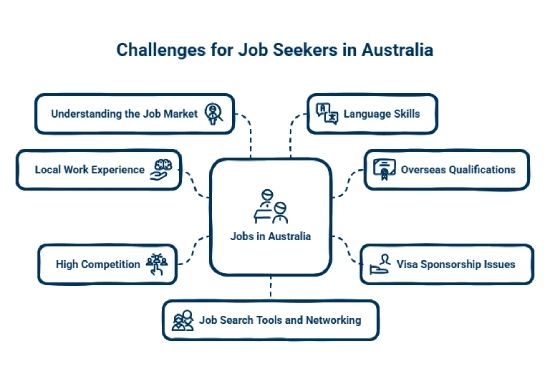
Here are some main challenges job seekers might face in Australia:
- Local Work Experience: Many employers like to see candidates who have worked in Australia before, which can make it tough for newcomers to find jobs.
- Overseas Qualifications: Some degrees or certifications from other countries aren’t recognized right away here, so you may need to get them assessed or take extra courses.
- Visa Sponsorship Issues: Not every employer is willing or able to sponsor international candidates, which limits the number of job options.
- High Competition: Jobs in fields like marketing and administration often attract many applicants, making it challenging to stand out.
- Understanding the Job Market: New arrivals may find it hard to get a handle on what’s expected in terms of resumes, industry norms, and recruitment practices in Australia.
- Language Skills: Good English communication is key, especially for jobs that involve dealing with clients or leading teams.
- Job Search Tools and Networking: If you are not familiar with local job boards or don’t have a strong network here, it can take longer to find a job.
*Finding it difficult to keep your resume up-to-date? Avail Y-Axis Resume Writing Services to get personalized assistance!
How to Navigate the Australian Job Market Successfully?
Australia's job market is always changing and pretty competitive, with great opportunities in different fields. Whether you are local or from abroad, it is important to understand what the job scene looks like and adjust your search strategy accordingly.
Here are some tips to help you find a job in Australia:
- Customize Your Resume: Make sure your CV is clear and to the point. Focus on your relevant experience and skip personal details like photos or birthdays.
- Check Official Job Portals: Look at reliable sites like Seek, JobActive, LinkedIn, and the Australian Government’s Workforce Australia for job listings.
- Network: Connect with people in your industry by attending events, using LinkedIn, or joining networking groups. This can help you find job openings that aren’t advertised.
- Look into In-Demand Jobs: See if your skills match jobs on the Skilled Occupation List (SOL). This can boost your chances of getting hired and finding visa sponsorship.
- Get Some Local Experience: Think about internships, volunteering, or taking short courses to build your credibility in the Australian job market.
Australian Job Market Summary
Australia's job market is looking pretty solid, with over 9.7 million people working full-time. The unemployment rate is around 4.0%, which suggests that the job market is steady. Some of the fastest-growing fields are healthcare, construction, professional services, and IT. You will find a lot of these jobs in cities like Sydney, Melbourne, and Brisbane, as well as in some regional areas where the government is investing more. There is also been a 13% increase in remote job listings compared to last year, which shows more folks are moving towards flexible work. Additionally, with the cap on skilled migration raised to over 190,000, Australia is definitely open to welcoming talent from abroad.
*Are you looking for step-by-step assistance for Australian Immigration? Contact Y-Axis, the leading visa and immigration consultancy in Canada!